
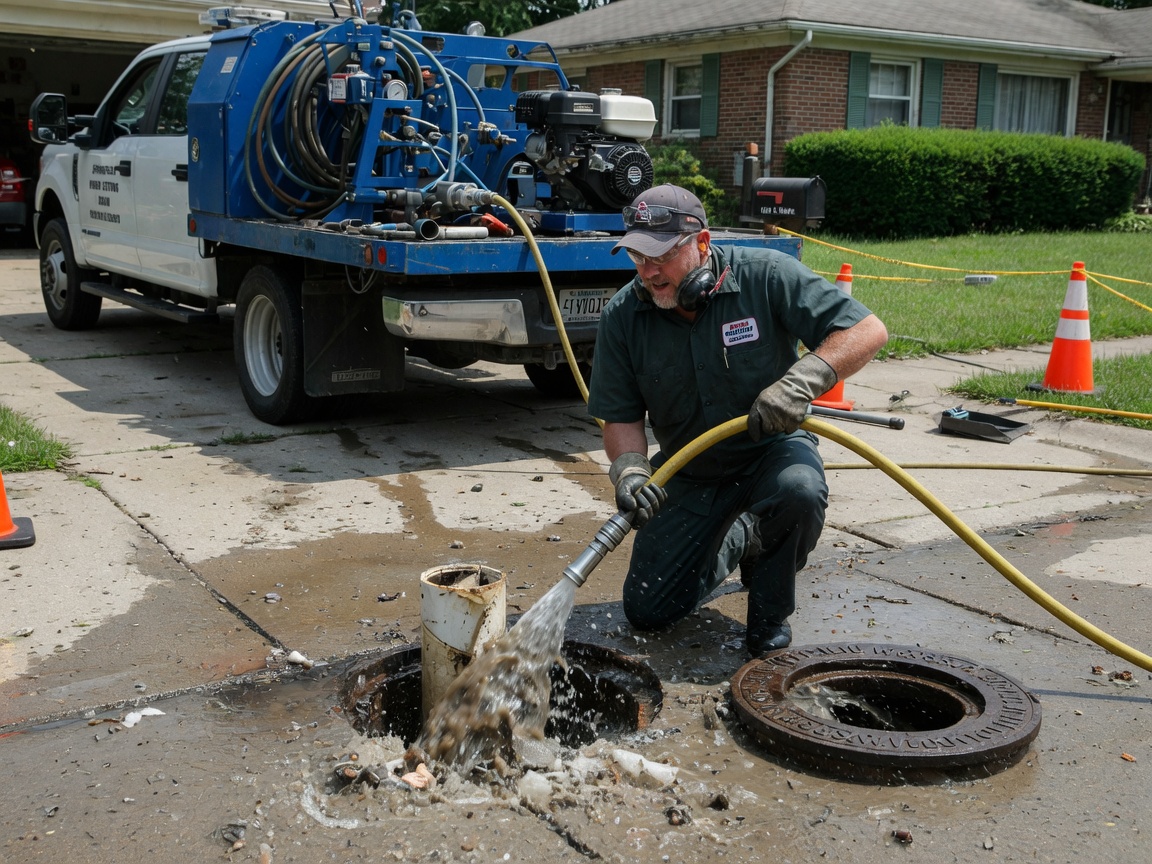
Hydro jetting uses streams of water at 3,000 to 5,000 psi to scour pipe walls clean rather than simply punching a hole through a clog. Across Illinois, older clay and cast-iron lines common in pre-war housing often have bell joints that can crack under excessive pressure, so experienced crews first run a camera to map pipe condition before selecting nozzle type and pressure. Cold winters freeze shallow lines statewide, creating ice dams that require slower, pulsed jetting to avoid splitting pipes. Hot humid summers bring heavier grease loads from restaurants and home kitchens alike, turning partial blockages into full backups within weeks.
Tree roots from mature oaks, maples and elms invade joints every spring when soil moisture rises — a pattern that repeats from the older neighborhoods of central Illinois to the established suburbs of the collar counties. A standard hydro jetting pass cuts roots flush but leaves hairline fractures that regrow within two seasons unless followed by a root-inhibiting treatment. Crews carry extra hose lengths because many 1920s and earlier homes sit on larger lots with long laterals running under driveways and sidewalks. Access points are frequently limited to small cleanouts in basements rather than yard cleanouts, requiring careful hose navigation to prevent kinks.
After jetting, a follow-up camera inspection confirms all debris has been flushed to the main and that no new damage occurred during the job. Properties on septic systems need the jetting truck to capture and haul away the slurry instead of pushing it into the tank. Seasonal timing matters: scheduling before the first hard freeze in November prevents ice from locking debris in place until spring thaw. Because teams work across Illinois 24 hours a day, emergency jetting for an active backup is available at any hour rather than waiting for the next business morning.
Technician insight
The thing that catches most people out with hydro jetting in Illinois is the brittle clay pipe laid before 1950, which is still under a huge number of homes across the state; one extra minute of high pressure and you create a new crack that turns a one-hour job into a full excavation. That is why the camera always goes in first.
Root blockage on a long lateral
A homeowner had slow drains after spring rains. Camera showed maple roots 40 feet from the cleanout. We jetted the line with a root-cutting nozzle, flushed the debris, and ran a second camera pass to confirm clear flow to the main without damaging the old clay pipe.
Hydro Jetting Services We Offer
✓Main Line Hydro Jetting
Clears full sewer laterals from house to street main in older Illinois properties where roots and sludge accumulate.
✓Kitchen Grease Jetting
Removes hardened cooking fats that build up faster during humid Illinois summers in restaurants and residential kitchens.
✓Bathroom Line Jetting
Targets soap scum and hair clogs in tub and shower lines common in pre-war homes throughout the state.
✓Tree Root Removal Jetting
Cuts invading oak, maple and elm roots from sewer joints without excavation.
✓Storm Drain Jetting
Flushes leaves, silt and debris from yard drains and French drains before heavy spring rains.
✓Commercial Floor Drain Jetting
Restores flow in high-use floor drains at businesses, with overnight scheduling available so work happens outside trading hours.
Hydro Jetting Cost in IL
| Service | Typical Range | What Affects It |
|---|---|---|
| Residential main line jetting | $350–$650 | Longer runs to the street main increase price |
| Kitchen or bath branch line | $225–$400 | Multiple fixtures or heavy grease adds time |
| Tree root cutting pass | $300–$550 | Follow-up root treatment optional |
| Commercial floor drain | $275–$475 | Overnight scheduling available outside trading hours |
| Storm drain clearing | $200–$375 | Debris volume and distance from truck access |
Ranges are typical for IL and confirmed with an exact written quote before any work starts.
How it works
- 1
Camera Inspection
Technician runs a camera from the cleanout to locate the blockage and assess pipe condition before any pressure is applied.
- 2
Nozzle Selection
Crew chooses the correct cutting or flushing head based on root, grease or sludge type found in the line.
- 3
High-Pressure Jetting
Water at controlled pressure scours the pipe walls while debris is flushed toward the main or captured for removal.
- 4
Final Camera Check
Post-jet inspection confirms clear flow and no new damage before the crew leaves the property.
Pricing
Cost depends on line length, access difficulty and material removed; most residential jobs fall in the ranges below.