2026-09-03 ·
How IL Winters Affect Home Drains
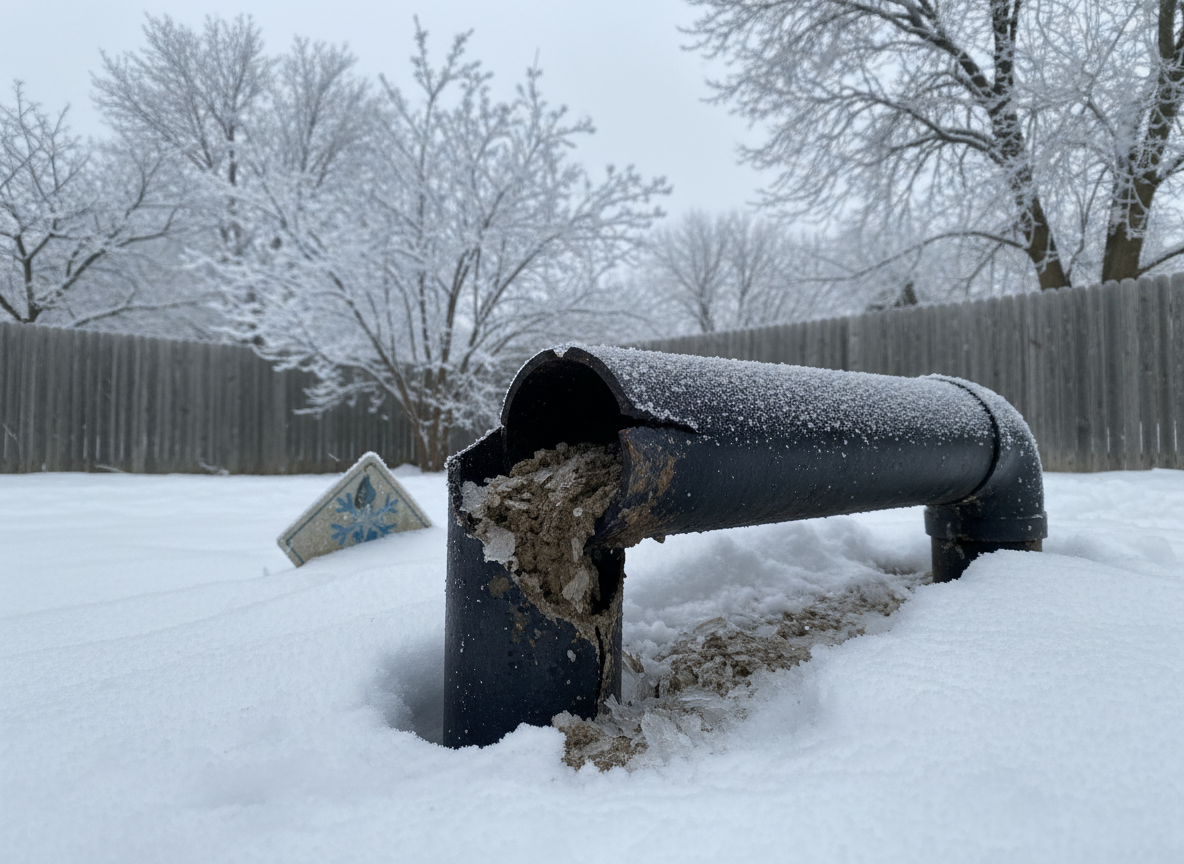
Illinois winters send temperatures below 20°F for days at a time, freezing standing water inside home drains and forcing pipes to expand until they crack or separate at joints. In Springfield this happens most often in lines that have already lost interior coating from decades of use.
Freezing and Pipe Expansion in Sangamon County
When water inside a 4-inch main turns to ice it increases roughly 9 percent in volume. That force pushes against brittle cast iron common in Enos Park and Laketown homes built before 1960. Joints that once held for 40 years separate, sending wastewater into the surrounding soil until the ground thaws and the leak becomes obvious. Downtown Springfield properties with shallow sewer laterals see the same breaks because the frost line reaches 30 inches in a typical January. Nearby Rochester and Sherman report identical failures once night lows stay under 15°F for more than three consecutive days.
Homeowners notice reduced flow first in basement floor drains and laundry standpipes because those lines sit lowest and hold water longest. A single night of 10°F weather can lock an entire 20-foot run of 3-inch pipe, and the resulting pressure often splits the pipe at the next cleanout rather than at a fitting.
Thaw Cycles and Sudden Water Volume
Spring warm-ups in Sangamon County melt roof and street snow in 48 hours, sending extra water into already stressed laterals. The sudden rush dislodges ice chunks and sediment that formed during the freeze, creating new blockages at the same spots that cracked weeks earlier. Oak Ridge and Auburn streets see repeated calls after every major thaw because the combined flow exceeds what narrowed winter pipes can carry.
Soil around foundations also shifts when frozen ground expands then contracts, stressing the 45-degree bends where house drains meet the city main. These movements open hairline fractures that only leak once the ground saturates again.
Older Housing Stock and Winter Drain Failures
Springfield neighborhoods built between 1920 and 1955 contain mostly 4-inch and 6-inch cast iron that has lost 30 to 50 percent of its original wall thickness. Enos Park and parts of Downtown show the highest incidence because those blocks were connected to the original combined sewer system. Lines under 1950s slabs in Laketown often lack cleanouts, so a winter freeze forces water back into the house instead of out to the street.
Chatham and Sherman homes from the same era face the same material limits yet sit on slightly different soil, so the cracks appear closer to the foundation wall rather than under the street. In every case the winter damage shows up first as slow kitchen or bath drains rather than complete stoppages.
Practical Steps Before and After Cold Snaps
Keep a 1/2-inch stream of water running in the lowest fixture during multi-day freezes; the moving water rarely reaches 32°F inside the pipe. After a thaw, run a main sewer line cleaning through the cleanout to clear any ice-scoured debris before it compacts again. Schedule a preventive drain maintenance visit each November so minor offsets are documented before winter sets in.